The History of Cannabis: From Ancient Plant to Modern Dispensary
The history of cannabis from ancient Central Asia to today: its spread, U.S. prohibition, legalization in Ohio and Maryland and the 2026 federal rescheduling.
By Bloom Team
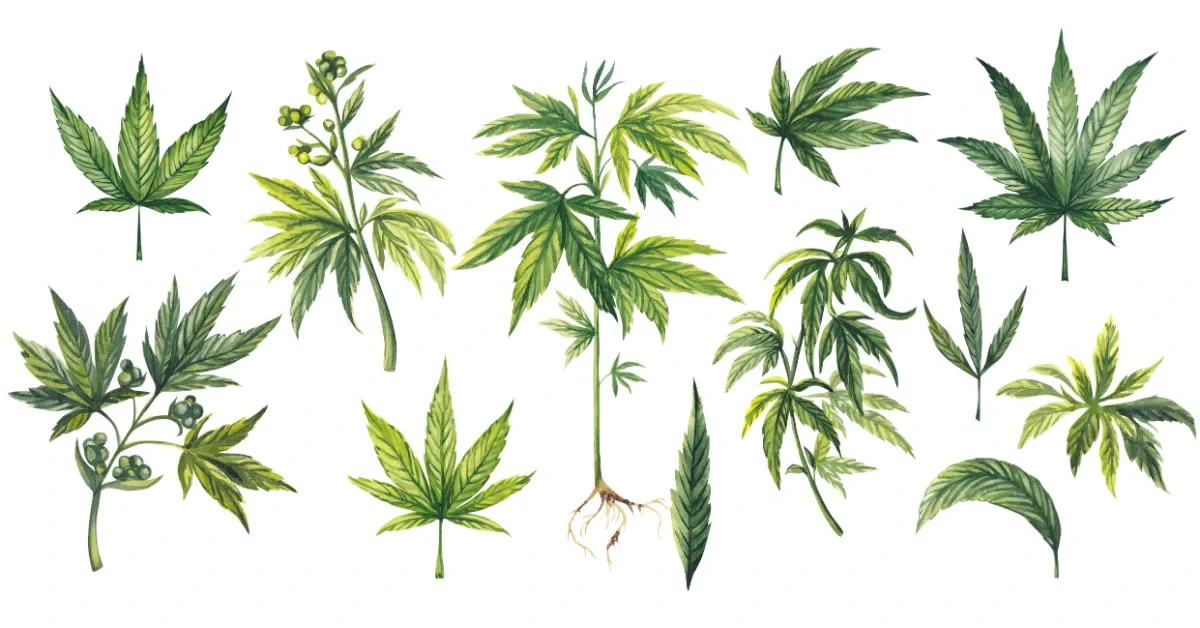
People have used cannabis for thousands of years. It’s one of the oldest cultivated plants on earth, and it’s been woven into medicine, religion, textiles and daily life across nearly every civilization that encountered it. The cannabis on a dispensary shelf today is the descendant of an extraordinary global history, and the last century of that history, especially in the United States, is where things got complicated. This guide walks through the timeline: ancient origins, global spread, prohibition and the modern wave of legalization.
Ancient Origins
Cannabis is believed to have originated in Central Asia, in the region that is now Mongolia, Kazakhstan and western China. Hemp fibers and seeds appear in some of the earliest archaeological records of farming in East Asia, which is why cannabis is often counted among the first plants people domesticated.
In 2019, researchers found burned cannabis residue in 2,500-year-old wooden braziers at the Jirzankal Cemetery in western China. It’s some of the earliest direct evidence of people using cannabis for its psychoactive effects, and the residue showed higher THC levels than typical wild cannabis, suggesting people were already selecting for potency.1
Ancient China used cannabis widely. Traditional texts credit the legendary emperor Shen Nung, said to have lived around 2700 BCE, with listing cannabis among his medicinal plants. Chinese farmers grew hemp for rope, cloth and food thousands of years before cannabis was used recreationally.
Cannabis Spreads Across the Ancient World
From Central Asia, cannabis traveled along trade routes in every direction:
- India: cannabis became part of Hindu religious practice, associated with the god Shiva and consumed in drinks like bhang. The Atharva Veda, composed around 1500–1000 BCE, lists it among five sacred plants.
- The Middle East: hashish spread across the Arab world, and the word “hashish” itself is Arabic. Hashish was well established by around the 10th century CE.
- Ancient Greece and Rome: both knew cannabis. In the 5th century BCE, the Greek historian Herodotus described the Scythians throwing cannabis on hot stones in steam tents. Roman physicians also wrote about it.
- Africa: cannabis spread from the Arab world into Africa through trade and became part of traditional practice in many regions.
- Europe: mostly grown as hemp for rope, sails and cloth until relatively recently.
Cannabis in Early America (1600s–1800s)
Cannabis arrived in colonial America mainly as industrial hemp. In 1619, Virginia’s colonial assembly required farmers to grow hemp, which was essential for ship rigging and sails. George Washington and Thomas Jefferson both grew hemp on their estates, though there’s no reliable evidence they used it any other way. For more, see independence built on hemp and America and marijuana.
In the 19th century, cannabis entered Western medicine through Irish physician William O’Shaughnessy, who studied its use in India and introduced it to British medicine in the late 1830s and early 1840s. Cannabis tinctures soon became common in American and European pharmacies.
The Beginning of Prohibition (1900–1937)
U.S. prohibition happened quickly, and for reasons that had little to do with the plant itself. Several forces converged in the early 20th century.
The Mexican Revolution
The Mexican Revolution of 1910 brought many Mexican immigrants to the American Southwest, along with recreational cannabis smoking. The Spanish word “marihuana” was unfamiliar to most English speakers, and anti-cannabis campaigners used it to distance the drug from “cannabis,” the familiar term on pharmacy labels.
Harry Anslinger and the Federal Bureau of Narcotics
Harry J. Anslinger, the first commissioner of the Federal Bureau of Narcotics, created in 1930, led a national campaign against cannabis. His rhetoric relied on racist stereotypes and sensational claims about violence and insanity, and it succeeded despite pushback from the medical community.
The Marihuana Tax Act of 1937
This federal law effectively criminalized cannabis through a tax scheme that made legal possession nearly impossible. The American Medical Association opposed it, arguing it would cut off a useful medicine. The objection was ignored.
Mid-Century and the Counterculture (1940s–1970s)
Cannabis went underground but never disappeared. It stayed popular in jazz culture in the 1930s and ’40s, gained visibility with the Beat Generation in the 1950s and spread widely during the 1960s counterculture. See the history of 420.
In 1970, the Controlled Substances Act placed cannabis in Schedule I, the most restrictive category, reserved for drugs considered to have no accepted medical use and a high potential for abuse. That classification made scientific study of cannabis unusually difficult for decades. In 1971 the Nixon administration launched the modern War on Drugs. A commission Nixon appointed, the Shafer Commission, recommended in 1972 that possession of small amounts be decriminalized; Nixon rejected it.
The Long Road to Legalization (1996–Today)
Modern legalization started with medical cannabis. In 1996, California voters passed Proposition 215, making it the first state to legalize medical cannabis, and other states followed. The movement owes a great deal to AIDS activists; see the AIDS activists who launched the medical cannabis industry.
Recreational legalization began in 2012, when Colorado and Washington voters approved it. Some milestones since then:
- 2012: Colorado and Washington legalize recreational cannabis.
- 2014: Alaska, Oregon and Washington, D.C. follow.
- 2016: California, Massachusetts, Maine and Nevada legalize.
- 2018: Michigan becomes the first Midwest state to legalize recreational cannabis.
- 2020: Arizona, Montana, New Jersey and South Dakota voters approve recreational measures.
- 2022: Maryland voters approve recreational legalization.
- 2023: Ohio voters approve recreational legalization.
Today most U.S. states allow medical or recreational cannabis in some form.
The Federal Picture Is Shifting
In 2026, federal policy began to move. Following a December 2025 executive order, the Justice Department in April 2026 moved FDA-approved marijuana products and marijuana covered by a state medical license from Schedule I to Schedule III.2 Recreational marijuana remains in Schedule I for now. The DEA held a hearing in June and July 2026 on rescheduling the rest of marijuana, and as of this writing that question hasn’t been resolved.3 Rescheduling doesn’t make recreational cannabis federally legal.
Ohio and Maryland
Ohio’s first medical dispensaries opened in early 2019, and in November 2023 Ohio voters approved recreational cannabis through Issue 2, making Ohio the 24th state to legalize it. Maryland’s medical dispensaries opened in late 2017; voters approved recreational legalization in 2022, and recreational sales began in July 2023. See Happy Maryland Day: the road to recreational cannabis and is weed legal in Ohio.
Modern Cannabis Science
Scientific understanding of cannabis has grown enormously in the last 30 years. The endocannabinoid system was mapped out only in the late 1980s and 1990s, and researchers are still learning how cannabinoids interact with the body. Products that would have seemed impossible a generation ago, like lab-tested edibles dosed to the milligram, detailed lab reports and concentrates of 90% purity, are now standard in legal dispensaries. See the most influential cannabis research studies.
Why the History Matters
Prohibition lasted most of a century in the United States, and its effects are still unwinding. Millions of people were arrested for nonviolent cannabis offenses, disproportionately people of color, and the War on Drugs reshaped criminal justice in ways the country is still reckoning with. Knowing that history helps explain the industry today: why regulation looks the way it does, why research stalled for decades and why legalization has been slow and uneven.
Frequently Asked Questions
How long have people used cannabis?
For thousands of years. Hemp appears in some of the earliest farming records in East Asia, and direct evidence of psychoactive use dates back at least 2,500 years.
Who first discovered cannabis?
No single person. Many ancient cultures across Central Asia used it, likely independently. Chinese texts crediting Emperor Shen Nung are legend rather than history.
Why is cannabis called marijuana?
“Marihuana” is a Mexican Spanish word that entered American English in the early 1900s. Prohibitionists promoted it to make cannabis sound foreign compared with the medical term “cannabis.”
When did cannabis become illegal in the U.S.?
Federal prohibition effectively began with the Marihuana Tax Act of 1937 and was reinforced in 1970, when the Controlled Substances Act placed cannabis in Schedule I.
Why was cannabis made illegal?
Historians point mainly to racial politics, economic interests and moral campaigning rather than scientific evidence. The medical community largely opposed prohibition at the time.
Is cannabis legal federally?
Not for recreational use. In 2026, the federal government moved FDA-approved marijuana products and state-licensed medical marijuana to Schedule III, while recreational marijuana remains in Schedule I. Whether the rest of marijuana will be rescheduled is still being decided.
The Bottom Line
Cannabis is an ancient plant with a modern controversy. People have used it for food, fiber, medicine and ritual for thousands of years, and its prohibition in the United States was a relatively short and unusual chapter in that history. Today’s dispensary cannabis is the product of that long heritage and a few decades of science finally catching up.
Visit a Bloom dispensary in Ohio or Maryland to see where that history has led.
Footnotes
-
Ren et al., 2019. The origins of cannabis smoking: Chemical residue evidence from the first millennium BCE in the Pamirs. Science Advances. ↩
-
Hogan Lovells, 2026. Federal marijuana rescheduling arrives. ↩
-
Morgan Lewis, September 2026. Post-DEA hearing, broader marijuana rescheduling questions remain. ↩
For general information. This post isn't medical or legal advice. Cannabis rules differ between Ohio and Maryland and can change, so check with the Ohio Division of Cannabis Control or the Maryland Cannabis Administration. Talk to a healthcare provider before using cannabis for a medical condition. For adults 21+ and registered medical patients.
More from the Bloom blog.

Culture6 min read
Cannabis Festival Etiquette: A Field Guide for Summer
The unwritten rules of cannabis festival etiquette: how to share, when to pass, how the vibe shifts by genre and how to stay on the right side of the law.
Jose PatinoJuly 1, 2026
Culture6 min read
Earth Day Events and Spring Activities in Lake County, Ohio: April 2026 Guide
Celebrate Earth Day in Lake County this April! From Holden Arboretum to Headlands Beach cleanup and Mentor Earth Day events, here's your 2026 spring guide.
Bloom TeamApril 8, 2026
Culture2 min read
Akron Sakura Festival 2026
Join 50K+ visitors at Downtown Akron's 6th annual Sakura Festival on April 4. Japanese culture, food, art, live music & more. Open 1-7pm.
Bloom TeamMarch 31, 2026
Earn points, get the deals first.
Join Bloom Rewards free and start with 200 points, plus member-only deals and news from Bloom.
- 200 points for joining
- 1 point per $1 spent
- 100 points = $5
- Member-only deals and drops
Earn at any Bloom in Ohio or Maryland. Pick your store when you sign up.