What are THCP and CBDP? Discoveries in Cannabinoid Research
Italian researchers discovered THCP and CBDP in 2019. Learn why THCP binds to CB1 receptors more strongly than THC and what the discovery could mean.
By Bloom Team
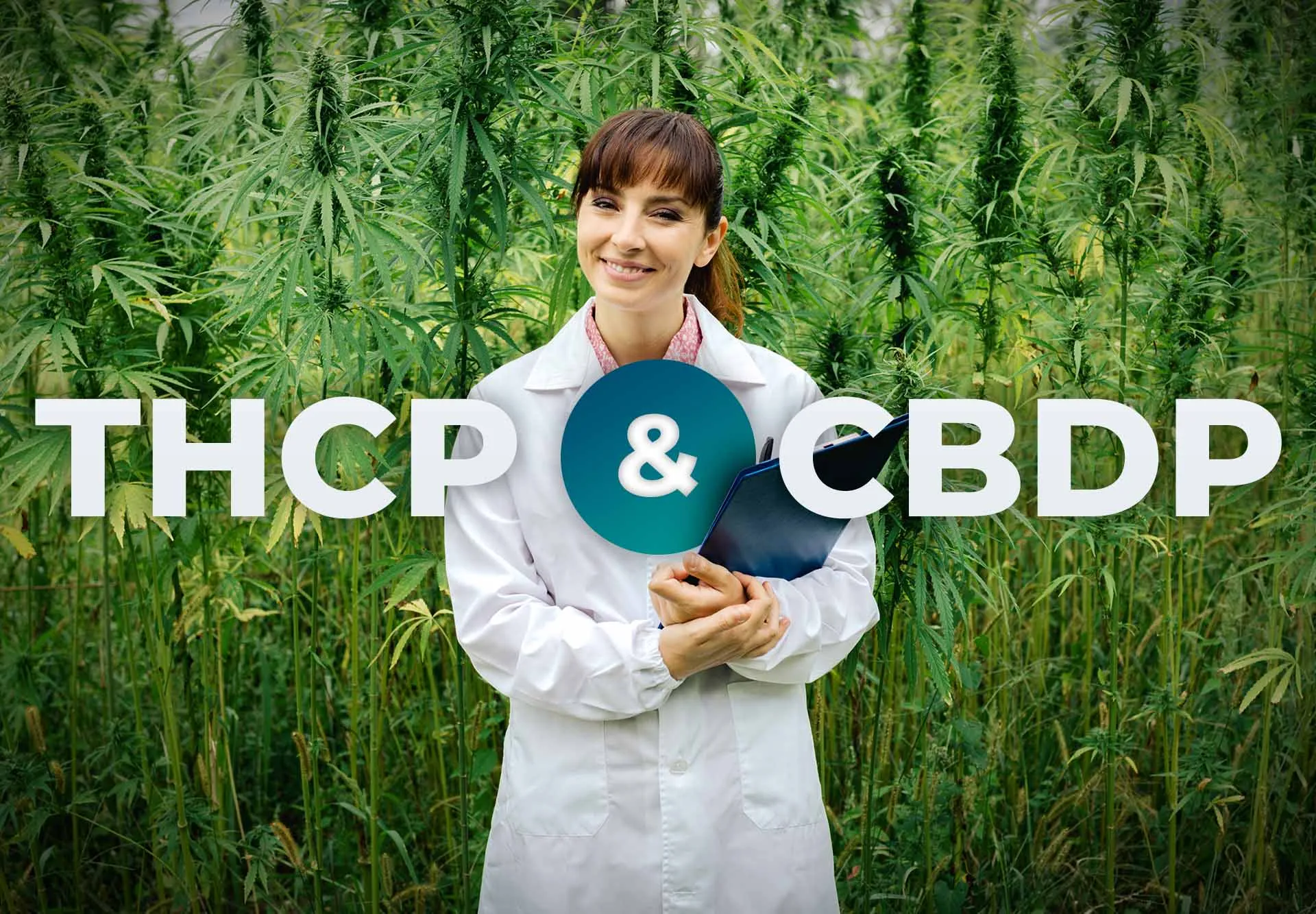
A team of Italian researchers who were doing a study on industrial hemp, stumbled upon two new cannabinoids; THCP and CBDP. They published their study in Scientific Reports on December 30, 2019. In this article we will explain the ramifications of this exciting yet unexpected discovery and discuss the analytical tools used in their study.
Professor Giuseppe Cannazza of the University of Modena and Reggio Emilia conducted the study. His team included Cinzia Citti and Pasquale Linciano. The original focus of their project was to investigate an industrial hemp strain known as FM2. In doing so, they identified two new cannabinoids, which they named THCP and CBDP. The team had also discovered two other cannabinoids, THCB and CBDB, the previous year.
This research is part of UNIHEMP (Use of Industrial Hemp Biomass For Energy and New Biochemical Production), funded by the Italian Ministry of Education, University and Research and the European Regional Development Fund.
Why This Is Such A Big Deal
THCP was shown to contain a 7 link side chain which has never been seen before in a naturally occurring cannabinoid. THC contains a 5 link side chain. These extra two links allow THCP to bind more effectively to CB1 and CB2 receptors.
- THCP was 33 times more active than THC
- THCP was 63 times more active than THCV
- THCP was 13 times more active than the newly discovered cannabinoid THCB against CB1 receptor
- THCP is more lipophilic (making it easier to dissolve in or combine with fats)
According to Dr. Cannazza, his research team stumbled upon the discovery of THCP precisely “because no one was looking for them.” The research uncovered the presence of the phytocannabinoids, THCP and CBDP, in the strain supplied by the Italian government. That has left the team in the dark about whether or not and to what extent other chemovars can produce these two cannabinoids.
The discovery of THCP may explain why some strains that have low levels of THC are more potent, both in their psychotropic effects as well as in their therapeutic benefits. Learn more about another lesser-known cannabinoid in our guide to THCV, and about the CB1 and CB2 receptors in our overview of the endocannabinoid system.
Metabolomics and Mass Spectrometry
Dr. Cannazza’s team employed the use of metabolomics to analyze the FM2 strain. Metabolomics measures metabolites by combining mass spectrometry and chromatography for separation. The result is a pattern represented by a digital readout of an individual’s current health status that can be used as a diagnostic tool.
Metabolomics can be used to provide a direct measurement of the body’s response to cannabis treatment and use. Assessing individual metabolites can identify how the body changes before and after cannabis use in relation to its potential alterations to neurotransmitters or natural endocannabinoids.
Mass spectrometry is an analytical technique which explains the structural and chemical properties of specific molecules. It identifies unknown compounds and measures known compounds within a given sample.
The role that mass spectrometry plays regarding safety in cannabis testing includes the following:
- Pesticide residue analysis
- Heavy metal level
- Mycotoxins from mold
- It is also used to test the potency of cannabinoids and assess terpene profiles in a particular strain.
Cannabimimetic Properties
The results of the study indicate that the percentages of THCP were lower than those of THC within the plant, both in vitro and in vivo. The two new compounds also appear to have cannabimimetic properties; they engage with CB1 receptor activation which far exceeds the activation of CB1 and CB2 receptors of THC in its decarboxylated form. As a result of the stronger engagement by THCP of the CB1 receptors in the brain, the consumer may end up with excessively potent and intoxicating effects.
The Italian team used mouse models which demonstrated that the binding potential of THCP on CB1 receptors caused similar behavioral and physiological effects to THC at about half the dose. These included hypomotility (deficiency of movement), a reduction in rectal temperature, an analgesic effect and catalepsy (a trancelike state where limbs remain in the position in which they are placed.) The strong binding may help explain why certain chemovars with THCP seem to have stronger effects than those with THC alone.
Another member of the team, Dr. Citti, believes that both THCP and CBDP may have important medical applications, but that further investigation is needed to understand not only the benefits but the risks in using these cannabinoids. She foresees the development of THCP-rich cannabis varieties in the future once the pharmacological profile of THCP is determined.
Just a side note that the Italian team also identified CBDP. Cannabis researchers have established that CBD does not bind particularly well to CB1 and CB2 receptors. Like the chemical structures of THCP and THC, CBDP has a seven link side chain while CBD has a five link side chain. Dr. Cannazza and his team do not believe that the two additional links in CBDP would impact its effectiveness in binding to cannabis receptors. Although they suspect that CBDP is more potent than CBD, they are focusing most of their attention on THCP.
The properties and potential uses of THCP and CBDP are not known, but researchers agree that they should be included in the list of major cannabinoids that deserve much more investigation. This opens the door to the possibility of creating strains that have strong pharmacological effects which require much lower dosages.
Sources:
- hightimes.com, What We Know So Far About The Newly Discovered Cannabinoids THCP and CBDP, Dario Sabaghi, Feb. 3, 2020
- cannabissciencetech.com, Metabolomics: The Next Step in Personalized Cannabis Medicine, Megan L’Heureux, Dec. 2, 2019
- cannabisdispensarymag.com, New Discovered Natural Cannabinoid THCP Offers Greater Potency Than THC, Andrea Sparr-Jaswa, Jan. 10, 2020
- iflscience.com, Scientists Isolate and Describe Two New Cannabinoids Found in Marijuana, Madison Dapcevich, Jan. 7, 2020
For general information. This post isn't medical or legal advice. Cannabis rules differ between Ohio and Maryland and can change, so check with the Ohio Division of Cannabis Control or the Maryland Cannabis Administration. Talk to a healthcare provider before using cannabis for a medical condition. For adults 21+ and registered medical patients.
More from the Bloom blog.

Education9 min read
What Are THC Drinks? A Complete Guide to Cannabis Beverages
What are THC drinks? How nano-emulsified cannabis beverages work, how fast they kick in, how they compare with alcohol and edibles, and how to dose them.
Bloom TeamNovember 10, 2026
Education5 min read
Cooking with Cannabis: Butter, Oil and Infusion Basics
Cooking with cannabis: how to decarb, make cannabutter and cannabis oil, estimate the THC in homemade edibles, and simple recipes to start with.
Bloom TeamOctober 30, 2026
Education3 min read
Cannabis Topicals: How They Work and How to Use Them
What are cannabis topicals? How creams, balms, roll-ons and patches work, why most don't get you high, how to use them and what to know about drug tests.
Bloom TeamOctober 27, 2026
Earn points, get the deals first.
Join Bloom Rewards free and start with 200 points, plus member-only deals and news from Bloom.
- 200 points for joining
- 1 point per $1 spent
- 100 points = $5
- Member-only deals and drops
Earn at any Bloom in Ohio or Maryland. Pick your store when you sign up.