Cannabis and Sleep: What to Consider Before You Try It
Cannabis and sleep: what research says about THC, CBD, CBN and REM sleep, terpenes in nighttime strains, products people use and the trade-offs.
By Bloom Team
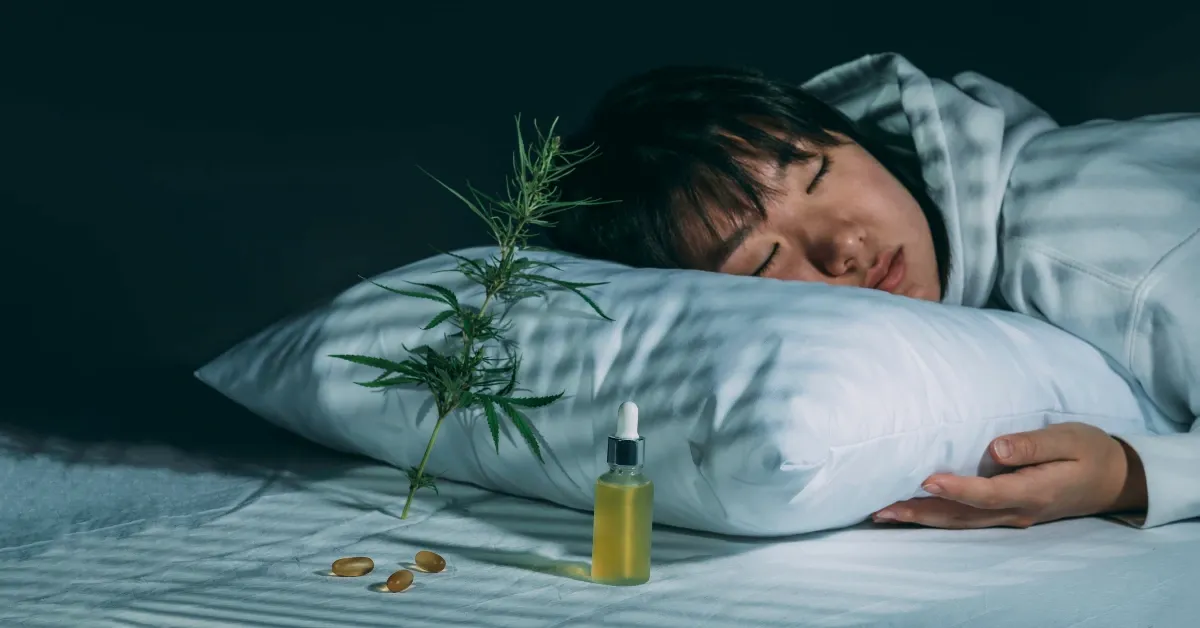
Cannabis and sleep have a long, complicated relationship. Many people reach for cannabis at bedtime, and many say it helps them fall asleep. But the research is more nuanced than marketing makes it sound, and heavy nightly use can change how you sleep in ways most people don’t realize. This guide walks through what the science says, which cannabinoids, terpenes and products people reach for at night, and the trade-offs to know about.
This article is for educational purposes and isn’t medical advice. If you have ongoing sleep problems, talk to a healthcare provider.
What Does the Research Say?
The short answer: it’s complicated. A 2017 review of the research on cannabis and sleep found that THC may shorten the time it takes to fall asleep in the short term, but that long-term heavy use was linked to tolerance and to sleep problems when people stopped.1
In other words, results depend a lot on the dose, the product and how often you use it. Regular nightly use can build tolerance and may change REM sleep, the stage tied to dreaming, memory and emotional processing.
How Cannabis Affects Sleep
Time to Fall Asleep
Several studies suggest THC can shorten sleep onset, the time it takes to fall asleep. For people whose main complaint is “I can’t turn my mind off,” this is the effect they usually notice.
Less REM Sleep
One of the most consistent findings is that THC reduces REM sleep, the phase associated with vivid dreaming. Many people notice they stop remembering their dreams. When regular users stop, they often have unusually vivid dreams for a while as REM sleep “rebounds.”
Deep Sleep
Some research suggests cannabis may increase slow-wave sleep, the deep phase of sleep when the body does much of its physical recovery. The evidence is still limited.
Cannabinoids and Sleep
THC
The most studied cannabinoid for sleep. People often find lower doses work better than higher ones, which can leave you groggy or disrupt sleep later in the night. Reduced REM sleep is the main trade-off.
CBD
More complicated. Some people find low doses of CBD mildly alerting, and research on CBD and sleep is mixed. Unlike THC, CBD doesn’t appear to suppress REM sleep.
CBN
Heavily marketed as “the sleep cannabinoid,” but the science is thinner than the marketing. CBN forms as THC ages, and much of the relaxing feel of CBN products may come from the THC and terpenes that usually come with it. See what is CBN and major vs. minor cannabinoids.
Combinations
Many nighttime products pair THC with CBD, for example in 1:1 ratios, which some people find feel less intense than THC alone.
Terpenes Often Found in Nighttime Strains
Terpenes may shape how a strain feels as much as cannabinoids do. These show up often in strains people choose for the evening:
- Myrcene: earthy and musky; common in strains associated with couch lock. See our myrcene spotlight.
- Linalool: the floral terpene in lavender, long associated with relaxation. See our linalool spotlight.
- Caryophyllene: peppery and spicy.
For more on terpenes, see our guide to terpenes in cannabis. Strain labels like indica and sativa matter less than the terpene profile; see sativa vs. indica.
Products People Use at Night
Edibles
Edibles last longer than inhaled cannabis, which is why many people choose them for nighttime. They take 30 minutes to 2 hours to kick in, and higher doses can leave you groggy the next morning. See edible dosing for new users and experts.
Tinctures
Tinctures allow precise dosing and, held under the tongue, can start working within 15–45 minutes, which makes timing easier. See our guide to cannabis tinctures.
Flower and Vapes
Inhaled cannabis works fast but wears off sooner, typically within 1–3 hours. See how long a cannabis high lasts.
CBN Products
Results vary. Some people like them; others notice no difference from standard THC products.
Tips If You Use Cannabis at Night
- Start low. A low dose is often enough, and higher doses can backfire with next-morning grogginess.
- Time it. Edibles take longer to kick in than tinctures, and tinctures longer than smoking or vaping.
- Try a balanced ratio if THC alone leaves you feeling heavy the next morning.
- Skip alcohol. It disrupts sleep and adds to grogginess.
- Keep good sleep habits. Regular bedtimes, low light and less screen time before bed matter, with or without cannabis.
- Take breaks. Periodic tolerance breaks help keep tolerance in check.
Want a budtender’s take? See “I want something for sleep”: what that means at the counter.
The Trade-Offs to Know About
Less REM Sleep
THC reduces REM sleep. Researchers are still studying what that means for long-term heavy users.
Tolerance and Dependence
Tolerance can build quickly with nightly use. Many people find they need more for the same effect or have trouble sleeping without it.
Morning Grogginess
Higher doses, especially of edibles, can leave a fog the next morning. A lower dose usually helps.
Vivid Dreams When You Stop
When regular users stop, vivid or unpleasant dreams for a week or two are common as REM sleep returns. It passes on its own.
When Cannabis Isn’t the Right Answer
Talk to a doctor rather than relying on cannabis if:
- Your sleep problems are long-lasting or severe. A doctor can check for conditions like sleep apnea.
- THC tends to make you anxious.
- You take medications that may interact with cannabis.
- Your sleep problems are tied to your mental health.
Frequently Asked Questions
Is indica or sativa better for sleep?
The terpene profile matters more than the label. Strains high in myrcene and linalool are often described as more relaxing, and many are labeled indica.
Is CBN better than THC for sleep?
The science is inconclusive. Most CBN products also contain THC and terpenes that may be doing much of the work.
Can you become dependent on cannabis for sleep?
Yes. Regular nightly use can make it hard to sleep without cannabis. Periodic breaks help.
Does cannabis help with sleep apnea?
Cannabis isn’t an approved treatment for sleep apnea, and the research is mixed. If you think you might have sleep apnea, see a doctor.
The Bottom Line
Many people use cannabis at bedtime, and research suggests THC may help some people fall asleep faster in the short term. The trade-offs are reduced REM sleep, tolerance and the risk of relying on it, all of which are easier to manage with low doses and regular breaks. For ongoing sleep problems, talk to a doctor.
Have questions about nighttime products? Our budtenders at Bloom Ohio and Maryland can walk you through the menu.
Footnotes
For general information. This post isn't medical or legal advice. Cannabis rules differ between Ohio and Maryland and can change, so check with the Ohio Division of Cannabis Control or the Maryland Cannabis Administration. Talk to a healthcare provider before using cannabis for a medical condition. For adults 21+ and registered medical patients.
More from the Bloom blog.

Education9 min read
What Are THC Drinks? A Complete Guide to Cannabis Beverages
What are THC drinks? How nano-emulsified cannabis beverages work, how fast they kick in, how they compare with alcohol and edibles, and how to dose them.
Bloom TeamNovember 10, 2026
Education5 min read
Cooking with Cannabis: Butter, Oil and Infusion Basics
Cooking with cannabis: how to decarb, make cannabutter and cannabis oil, estimate the THC in homemade edibles, and simple recipes to start with.
Bloom TeamOctober 30, 2026
Education3 min read
Cannabis Topicals: How They Work and How to Use Them
What are cannabis topicals? How creams, balms, roll-ons and patches work, why most don't get you high, how to use them and what to know about drug tests.
Bloom TeamOctober 27, 2026
Earn points, get the deals first.
Join Bloom Rewards free and start with 200 points, plus member-only deals and news from Bloom.
- 200 points for joining
- 1 point per $1 spent
- 100 points = $5
- Member-only deals and drops
Earn at any Bloom in Ohio or Maryland. Pick your store when you sign up.