Major vs. Minor Cannabinoids: The Complete Breakdown
Major vs. minor cannabinoids explained: THC and CBD, plus CBG, CBN, THCV, CBC and delta-8, what the research says, and how to read a lab panel.
By Bloom Team
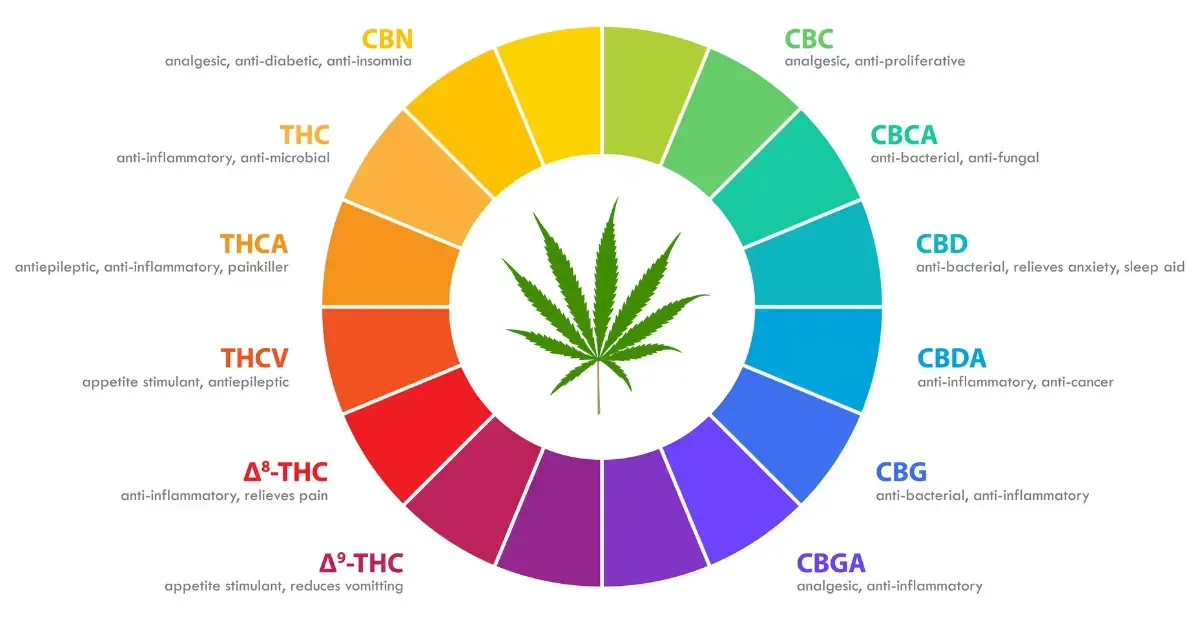
Cannabis produces more than 100 different cannabinoids. For years the conversation was dominated by just one, THC. Then CBD entered the spotlight. Now a third wave of cannabinoids has arrived on dispensary menus: CBG, CBN, THCV, CBC and others that were once overlooked. These so-called minor cannabinoids are some of the most interesting compounds in the plant, and they’re changing what a modern cannabis product can be.
What Is a Cannabinoid?
A cannabinoid is a chemical compound that interacts with the body’s endocannabinoid system. Cannabis produces them in trichomes, the sticky glands on the flower. Your body also makes its own, called endocannabinoids. Plant-made cannabinoids are called phytocannabinoids, and they’re what you see on a dispensary lab report. For the underlying biology, see our guide to the endocannabinoid system, and for where cannabinoids are made, see what are trichomes.
The Major Cannabinoids
THC (Delta-9-Tetrahydrocannabinol)
THC is the main psychoactive compound in cannabis. It binds strongly to CB1 receptors in the brain and produces the classic cannabis high: euphoria, altered perception, appetite stimulation and relaxation, and at higher doses, anxiety or paranoia in some people. THC is the compound legal cannabis markets regulate most closely, and it’s still the number most shoppers pay attention to.
CBD (Cannabidiol)
CBD is the second most abundant cannabinoid in most cannabis and the best-known non-intoxicating one. It doesn’t produce a high. It’s one of the most researched cannabinoids, and the FDA has approved one CBD-based prescription medication, Epidiolex, for certain rare forms of epilepsy.
For a full comparison of the two, see our guide to CBD vs. THC.
The Minor Cannabinoids
Minor cannabinoids are “minor” only because they usually appear in small amounts in traditional cannabis strains, not because they don’t matter. Breeders and extractors now produce strains and products that concentrate these compounds, which is opening up new kinds of cannabis products.
CBG (Cannabigerol): “The Mother Cannabinoid”
CBG’s acid form, CBGA, is the chemical precursor to THC, CBD and CBC. As a cannabis plant matures, most of it is converted into other cannabinoids, which is why finished flower usually contains less than 1% CBG. CBG is non-intoxicating. Researchers are interested in it, but a 2022 review noted that most studies so far have been in the lab or in animals, and human data is still limited.1
CBN (Cannabinol)
CBN forms as THC ages and oxidizes, which is why old cannabis often has more CBN than fresh flower. It’s only mildly psychoactive at most, and it’s most often marketed for nighttime use. The research behind those claims is surprisingly thin. Much of the relaxing feel of “CBN for sleep” products may come from terpenes or THC in the same formula. Read more in what is CBN.
THCV (Tetrahydrocannabivarin)
THCV is structurally similar to THC but behaves differently. Early research is looking at how it may affect appetite, which is the opposite of THC’s famous munchies.2 At higher doses it can be mildly psychoactive. THCV is most often found in African landrace sativas and in strains bred specifically for it. Learn more in what’s THCV.
CBC (Cannabichromene)
CBC is one of the most abundant cannabinoids in young cannabis plants but one of the least discussed. It’s non-intoxicating and appears to act mainly on receptors outside the endocannabinoid system, such as TRPV1.
Delta-8 and Delta-10 THC
These are close chemical cousins of regular (delta-9) THC. They’re psychoactive but generally described as less intense. Most delta-8 is made from hemp-derived CBD and sold outside licensed dispensaries, where testing and quality vary widely, and federal rules for these products are changing. See what is delta-8 THC and our federal hemp and delta-8 update.
Acidic vs. Neutral Forms
Every cannabinoid starts out in an acidic form with an extra carboxyl group: THCA, CBDA, CBGA and so on. These acids are non-intoxicating and convert to their neutral forms (THC, CBD, CBG) when heated, a process called decarboxylation. That’s why raw cannabis doesn’t get you high and why cannabis has to be heated before it’s infused into edibles. See the difference between THCA and THC and how to decarboxylate cannabis flower.
How Cannabinoids Work Together
The most interesting thing about cannabinoids isn’t what each one does alone, it’s what may happen when they work together with terpenes. That’s the entourage effect, and it’s one reason a full-spectrum flower with modest THC can feel more rounded than a distillate vape with much higher THC.
How to Shop for Minor Cannabinoid Products
- Read the whole lab panel. Look for products that list several cannabinoids, not just total THC. Here’s how to read a cannabis label.
- Keep expectations realistic. Minor cannabinoid products feel different from THC-only products, but the research behind specific claims is still early.
- Remember terpenes matter too. Two products with the same cannabinoids can feel different because of their terpene profiles.
- Try a balanced ratio if THC feels like too much. Products with equal THC and CBD (1:1) are popular with people who are sensitive to THC.
Our budtenders at Bloom Ohio and Maryland can point you to products on the current menu that list minor cannabinoids.
Frequently Asked Questions
What’s the strongest cannabinoid?
THC is the most intoxicating cannabinoid in traditional cannabis. Among non-intoxicating cannabinoids, CBD is by far the most studied.
Will minor cannabinoids get me high?
Most won’t. CBG, CBD, CBC and (mostly) CBN are non-intoxicating or only very mildly psychoactive. THCV and delta-8 can produce mild highs, especially at higher doses.
Is CBN really good for sleep?
The marketing is ahead of the science. There’s limited early evidence, and many CBN nighttime products also contain THC and terpenes like myrcene and linalool, which may be doing much of the work.
What’s the difference between THCA and THC?
THCA is the raw, non-intoxicating acid form. When you apply heat by smoking, vaping or baking, THCA converts to THC. Flower labeled with a high THCA percentage becomes high-THC once heated.
Are minor cannabinoids legal?
It depends on the state and the cannabinoid. In Ohio and Maryland, licensed dispensaries sell only state-tested, state-regulated products, so that’s the safest place to buy them.
The Bottom Line
Cannabis is more than THC and CBD. The minor cannabinoids now on the market, including CBG, CBN, THCV and CBC, are giving shoppers more options. Next time you shop, read the full cannabinoid panel, not just the headline number. That’s where the most interesting products are.
Footnotes
For general information. This post isn't medical or legal advice. Cannabis rules differ between Ohio and Maryland and can change, so check with the Ohio Division of Cannabis Control or the Maryland Cannabis Administration. Talk to a healthcare provider before using cannabis for a medical condition. For adults 21+ and registered medical patients.
More from the Bloom blog.
Education9 min read
What Are THC Drinks? A Complete Guide to Cannabis Beverages
What are THC drinks? How nano-emulsified cannabis beverages work, how fast they kick in, how they compare with alcohol and edibles, and how to dose them.
Bloom TeamNovember 10, 2026
Education5 min read
Cooking with Cannabis: Butter, Oil and Infusion Basics
Cooking with cannabis: how to decarb, make cannabutter and cannabis oil, estimate the THC in homemade edibles, and simple recipes to start with.
Bloom TeamOctober 30, 2026
Education3 min read
Cannabis Topicals: How They Work and How to Use Them
What are cannabis topicals? How creams, balms, roll-ons and patches work, why most don't get you high, how to use them and what to know about drug tests.
Bloom TeamOctober 27, 2026
Earn points, get the deals first.
Join Bloom Rewards free and start with 200 points, plus member-only deals and news from Bloom.
- 200 points for joining
- 1 point per $1 spent
- 100 points = $5
- Member-only deals and drops
Earn at any Bloom in Ohio or Maryland. Pick your store when you sign up.